
How to Get EIN Without SSN or ITIN
Yes, you can still get an EIN even if you’re a non-resident without a Social Security Number or ITIN, and…

“One keeps you compliant with the law. The other keeps you looking legit. But they’re not the same, and you’ll probably need both.” Let’s Clear the Confusion If you’re setting...
“One keeps you compliant with the law. The other keeps you looking legit. But they’re not the same, and you’ll probably need both.”
If you’re setting up a business in the U.S.—especially as a non-resident—you’ve probably come across terms like “virtual office,” “registered agent,” and “business address.”
And they sound similar. Some even offer both in one plan.
But here’s the thing: they serve different legal purposes. One is optional. One is required.
Let’s break down what they mean, what they don’t, and how to use them the right way.
Before diving into the main topic, let’s have a quick rundown on U.S. company formation. The U.S. lets you choose from a few main business structures:
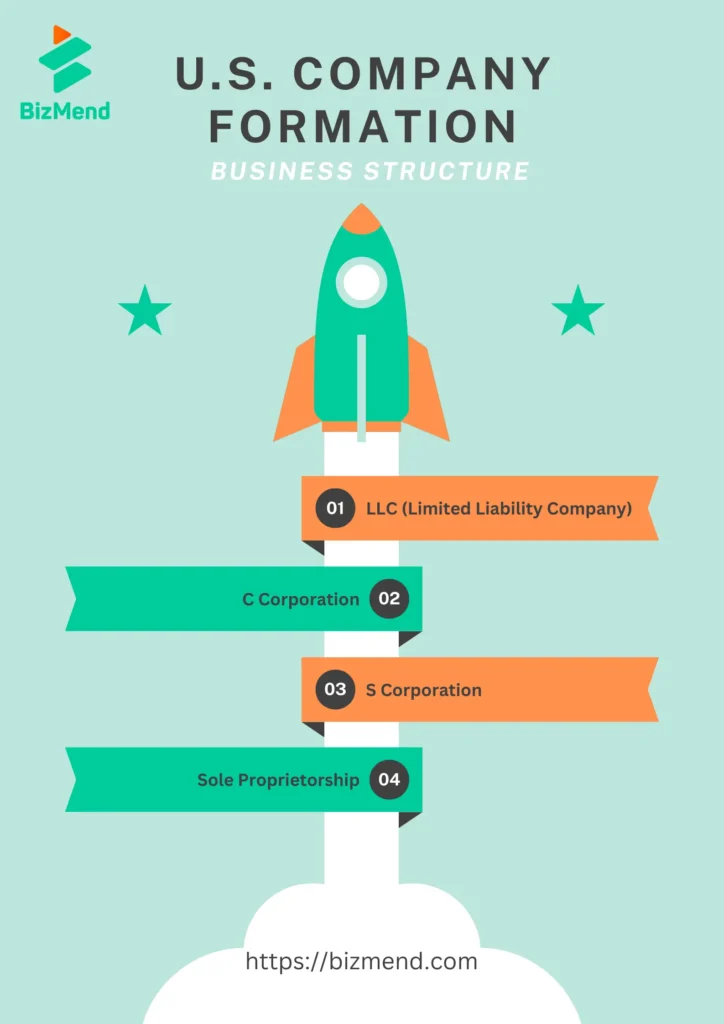
Most founders pick from:
For more details, check out “US Company Registration: Everything You Need to Know,” “Difference Between LLC and C Corporation in the U.S.,” or “S Corp vs C Corp: Which One Should You Choose?”
This context matters—because your virtual office and registered agent will connect directly to the structure and state you choose.
Think of a registered agent as your company’s legal “first responder.”
Every U.S. company—LLC or Corporation—is required by law to have one. This person or company receives:
Your registered agent must:
If you’re forming an LLC in Delaware, Wyoming, California, or anywhere else, this step is non-negotiable.
A virtual office is exactly what it sounds like—a remote business address and support service, designed to make your company look and operate like a real U.S. office without having a physical space.
It usually includes:
But here’s what it’s not:
It’s not a substitute for your registered agent. It’s also not required by law. It’s a tool—not a legal obligation.
Let’s stop treating them like synonyms—because they’re not.
If you’re forming a U.S. company for the first time (especially as a non-resident), this is one of the most misunderstood parts of the setup. People often think, “I’ve got an address—so I’m covered, right?”
Not necessarily.
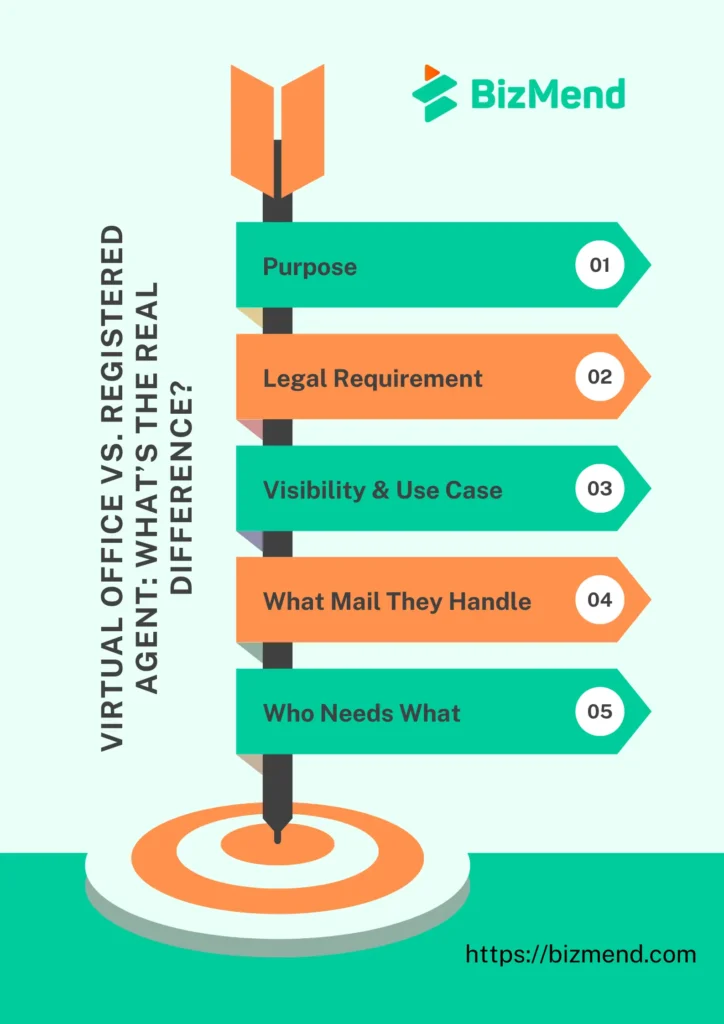
And let’s discuss in detail for your better understanding:
A registered agent exists for one purpose: legal compliance.
They receive government documents, tax notices, and legal papers on your behalf. That’s their job. And it’s legally required.
A virtual office exists to give your business a professional front—a U.S. address you can use for marketing, customer trust, or operational polish. It may come with extras like mail forwarding, a phone line, or even receptionist services.
A registered agent is mandatory. Every LLC or Corporation formed in the U.S. must list a registered agent with a physical address in the state where the company is formed.
A virtual office is optional. It’s useful, but no U.S. state requires you to have one.
This means that you can’t legally skip the registered agent, but you can absolutely run your business without a virtual office—especially if you don’t need customer-facing infrastructure.
A registered agent’s address goes on your official company filings. It becomes part of the public record. You don’t usually promote it—it’s there for legal and administrative reasons.
A virtual office address is what you put on your website, business card, invoices, or email signature. It’s the address you want clients to see, and it usually looks a lot nicer than your agent’s address.
Think of it like this:
Your registered agent is your backstage handler.
Your virtual office is your front-of-house.
Registered agents are only responsible for official government and legal documents. If someone sues your company? That notice goes to the registered agent. If your state sends you a franchise tax reminder? That’s on them, too.
Virtual office providers mostly deal with general business mail—packages, correspondence, checks, even marketing spam. Some may forward scanned documents to you, or store physical mail for pickup.
You need a registered agent if:
You may want a virtual office if:
They serve different purposes. And depending on how you’re setting up, you may need one, the other, or both.
| Aspect | Registered Agent | Virtual Office |
| Legally Required | Yes, it’s legally required in every U.S. state. | No, completely optional. |
| Main Purpose | Receive official government, tax, and legal documents. | Provide a business address for branding, mail, and communication. |
| Who Uses It | Every LLC or Corporation. | Founders who want a U.S. presence without a physical office. |
| Appears on State Records | Yes, publicly listed with your formation documents. | No. Not part of your company’s legal filings. |
| Used for Client Communication | No, not designed to be public-facing. | Yes, put it on your website, invoices, email, etc. |
| Mail Handled | Only legal/government documents | Business mail, packages, checks, customer letters, etc. |
| Physical Presence Needed | Must have a street—a real one—address in the state where your company is registered. | Can be in any state—flexible across jurisdictions |
| Available During Business Hours | Required. Must be accessible 9–5, Monday to Friday. | Not required, varies by provider. |
| Best For | Staying legally compliant, avoiding missed deadlines | Looking professional, building brand credibility in the U.S. |
| Common Misuse | Mistakenly using a virtual office as your legal agent (not allowed) | Assuming it’s legally sufficient (it’s not—registered agent still required) |
Not always. But it helps if:
U.S. business culture often values a business that “looks local.” A virtual office helps you get that look—even if you’re managing things from Dhaka, Delhi, or Dubai.
Yes, many providers bundle both services. But don’t assume one means the other.
When choosing a provider, ask:
You don’t want to miss a tax deadline because your “virtual address” wasn’t legally acting as your registered agent for your U.S. LLC.
Consult with an expert to stay compliant.
If you’re starting a company, having a registered agent isn’t optional—it’s a must-have.
Your virtual office is an optional add-on to build presence and polish.
If you’re starting lean, start with the legal requirement. You can always layer on branding and support services later.
Think of it like this:
Your registered agent keeps your company compliant.
Your virtual office helps it look and feel professional.
You don’t have to choose one over the other. You just have to know why you’re choosing each—and what happens if you skip either.
Because in the U.S., business is about structure. But it’s also about presence.
One keeps you legal. The other makes you look legit.
Nope, not unless the virtual office provider is legally authorized to act as a registered agent in your state.
A virtual office gives you a mailing address, not a legal representative. Always confirm this before you file your formation docs.
Depends on what you’re building.
You need a registered agent—no exceptions.
A virtual office? That’s more about branding, presentation, and customer trust. Helpful, especially for non-residents or remote teams—but not legally required.
Your company filing can be rejected.
And if you remove your registered agent later or miss a renewal? Your business can fall out of good standing, lose legal protections, and even be administratively dissolved.
Yes—but only if you:
Most non-residents can’t—and even residents often prefer to use a professional service to keep their home address private.
Sometimes. A U.S. business address can help you pass certain checks—but it’s not the only requirement.
You’ll still need:
A virtual office won’t substitute missing paperwork, but it can give you that “yes, we’re real” credibility.
Yes. When you register your company, your agent’s address shows up in public state records.
That’s one reason people opt for a separate virtual office—to keep their legal and public-facing details apart.
Absolutely. Most states let you update your registered agent by filing a simple form and paying a small fee.
If you’re switching from DIY to a professional service (or vice versa), make sure there’s no gap, so you don’t miss legal notices in between.

Yes, you can still get an EIN even if you’re a non-resident without a Social Security Number or ITIN, and…

Learn how to open a bank account in Australia: eligibility, documents, fees, and step-by-step process for residents, expats, and students.

Learn how to open a bank account in Pakistan: eligibility, documents, fees, and step-by-step process for residents, expats, and students.