

US Company Formation for Bangladeshi Entrepreneurs
“Borders are a concept. Business is universal. Build where it works for you.” “Is It Actually Possible for Me to…

Non-residents can get an EIN without SSN/ITIN — form a U.S. company first, file Form SS-4, and leave Line 7b (SSN/ITIN) blank. How to file: Online not allowed; submit by...
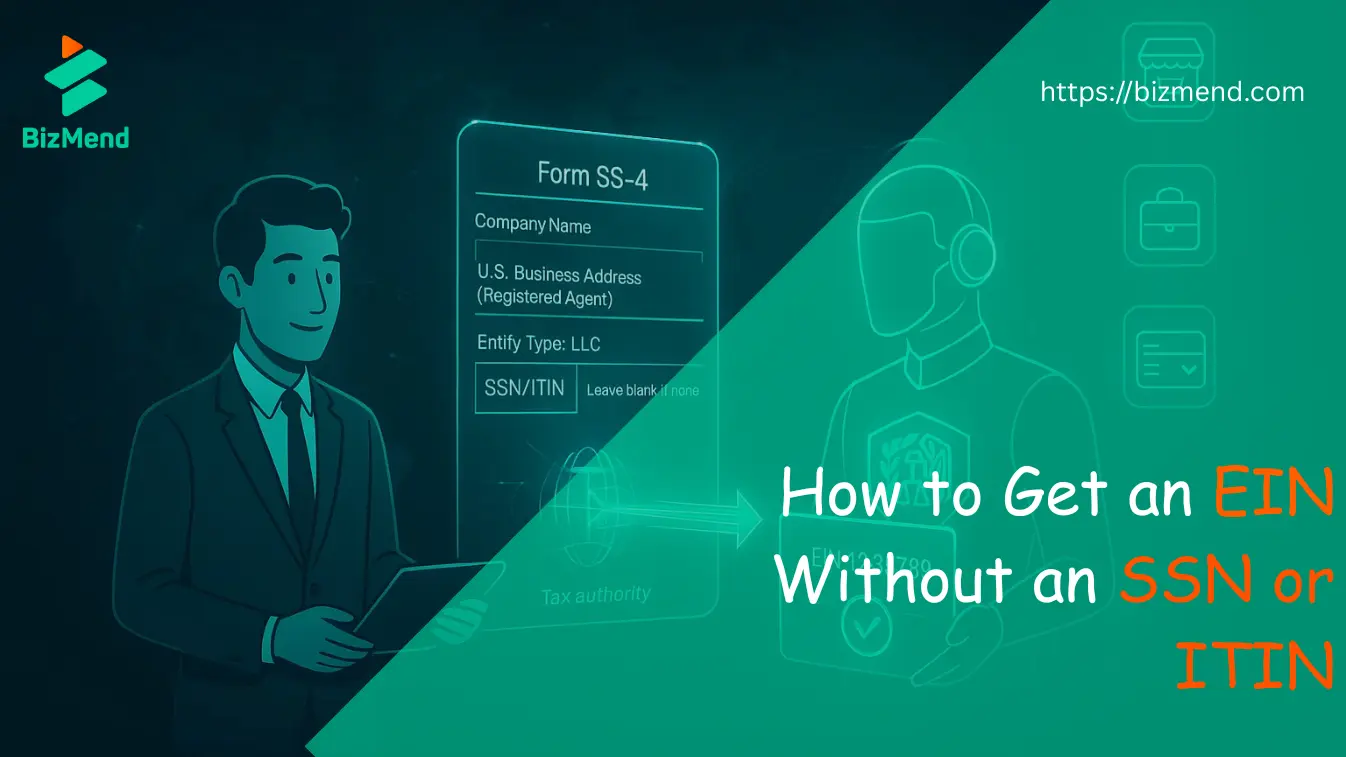
Yes, you can still get an EIN even if you’re a non-resident without a Social Security Number or ITIN, and it’s fully legal.
If you’re a global entrepreneur eyeing the U.S. market, you’ve probably hit this wall: How do I apply for an EIN without an SSN or ITIN?
An Employer Identification Number (EIN) works like a Social Security Number for your business. You need it to open a U.S. bank account, set up Stripe or PayPal, and stay compliant with the IRS. The snag? Most IRS forms ask for an SSN or ITIN.
Does that leave non-residents stuck? Not at all. You can still secure an EIN, it just takes a slightly different path.
In this guide, I’ll show you the steps, the documents you’ll need, the mistakes to avoid, and what to expect from start to finish.
Here’s the relief many non-residents look for: you don’t need a Social Security Number (SSN) or an Individual Taxpayer Identification Number (ITIN) to get an EIN. The important point to remember is that you need to already have a U.S. company formed; as the EIN is issued to a business entity, not to you personally. The IRS has made it clear: you can apply directly by using Form SS-4.
There’s just one catch: the online system won’t work without an SSN or ITIN. So instead, you’ll go the manual route:
Once the IRS reviews your application, they’ll send back an official letter with your EIN. From there, you can use it just like any other U.S. business would: for opening a bank account, handling taxes, or signing up with payment processors.
It’s a quite simple process, completely legal, and used by countless entrepreneurs around the world every year.
Getting an EIN without an SSN or ITIN gives non-residents a real entry point into the U.S. business world. Here’s why it matters:
In short, an EIN is more than just a number. It’s the backbone of your U.S. business identity, whether you’re running an online store from Dhaka or pitching investors from London.
Go to the IRS website and download Form SS-4. This is the official EIN application form.
Enter your company name, U.S. address (registered agent or virtual office), entity type (LLC, Corporation, etc.), and business purpose.
Tip: If you don’t live in the U.S., you can still use your registered agent’s address or a U.S. business address service.
Where the form asks for SSN/ITIN (Line 7b), simply leave it blank. The IRS allows non-residents to apply this way.
Once approved, you’ll get a CP 575 confirmation letter from the IRS. This is your official EIN proof document.
Common Mistakes to Avoid to get EIN
✅ Leave it blank if you don’t have one.
✅ Use a U.S. business or registered agent address.
✅ Decide beforehand (LLC is common for non-residents).
✅ Double-check every field before faxing.
Don’t let the lack of a U.S. SSN or ITIN stop your business dreams. With an EIN in hand, you can confidently build your U.S. presence and grow globally.
Q1: Can I apply online without an SSN or ITIN?
Answer: No. The online EIN application requires an SSN/ITIN. Use Form SS-4 by fax or mail instead.
Answer: Yes. Non-residents worldwide can apply using Form SS-4.
Answer: No. Get the EIN first, then use it to open a U.S. bank account.
Answer: No. An EIN identifies your business, while an SSN/ITIN identifies individuals.
Answer: Not necessarily, you can DIY. But many entrepreneurs use providers for convenience.
Answer: Yes. Once issued, your EIN never expires.

“Borders are a concept. Business is universal. Build where it works for you.” “Is It Actually Possible for Me to…
“Forming a U.S. company without an EIN? That’s like opening a bakery and forgetting the oven.” So You’ve Formed a…
“One keeps you compliant with the law. The other keeps you looking legit. But they’re not the same, and you’ll…