

How to Open a Bank Account in Australia
Learn how to open a bank account in Australia: eligibility, documents, fees, and step-by-step process for residents, expats, and students.

“You can’t cross the sea merely by standing and staring at the water.” — Rabindranath Tagore If you’ve ever found yourself looking at Bangladesh on the map and wondering, “could...
“You can’t cross the sea merely by standing and staring at the water.”
— Rabindranath Tagore
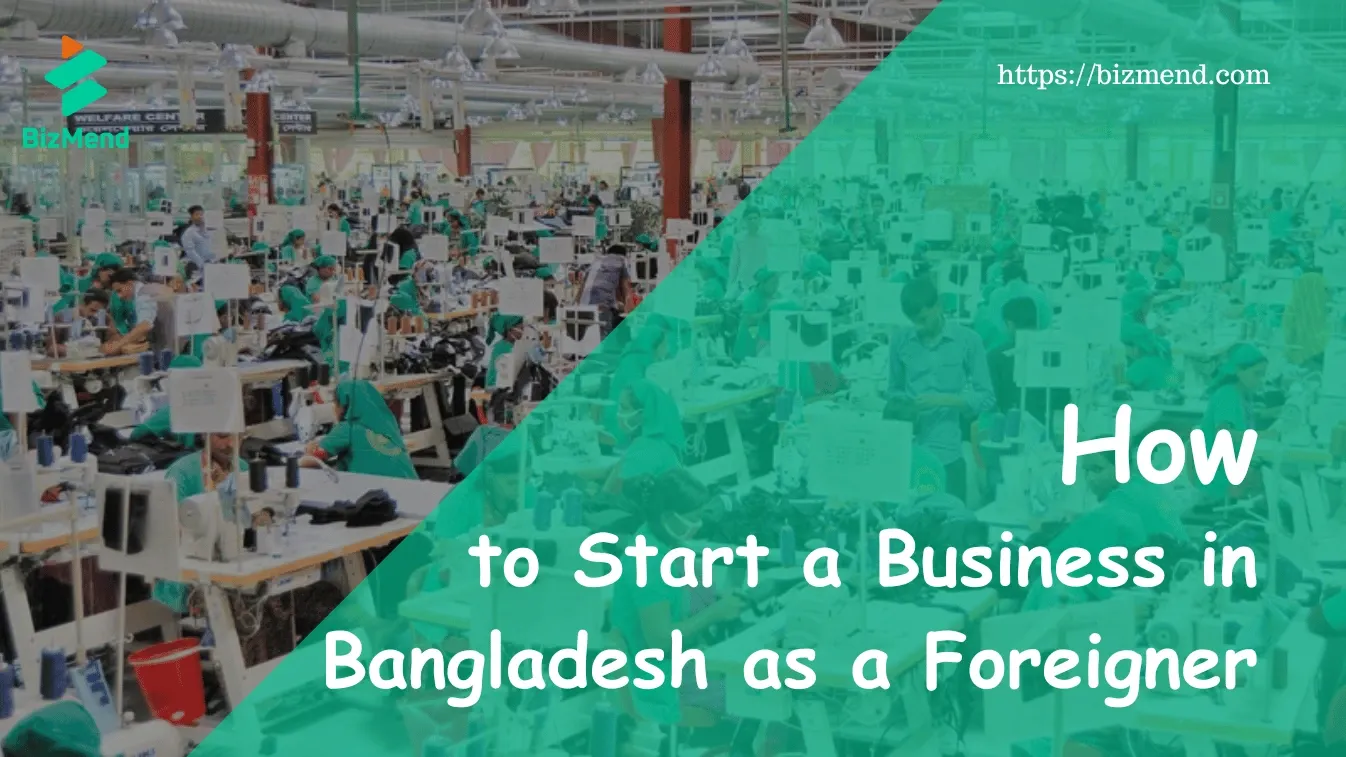
If you’ve ever found yourself looking at Bangladesh on the map and wondering, “could I start a business there?”—This post is your step-by-step playbook on how to start a business in Bangladesh as a foreigner, from picking your structure to scoring your trade license.
Bangladesh isn’t flashy. It doesn’t market itself like Dubai. But behind the dust, traffic, and unapologetically chaotic beauty lies a rising entrepreneurial heartbeat. Whether you’re a digital nomad, investor, or someone wanting to turn ambition into action, Bangladesh is no longer just a manufacturing hub—it’s becoming a startup playground.
This is your real, no-jargon guide on how to start a business in Bangladesh as a foreigner, from registration to biriyani-fueled business meetings.
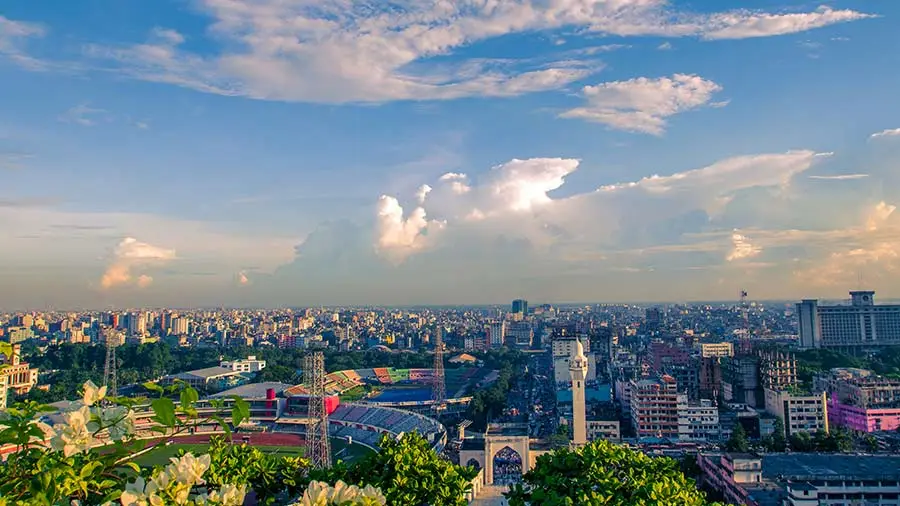
Bangladesh isn’t just about golden rice fields and colorful rickshaw art—it’s also one of Asia’s fastest-rising economies. With a growing middle class and a buzzing startup culture, the country’s momentum is hard to miss. The World Bank backs it up with steady GDP growth, while industries like textiles, agriculture, IT outsourcing, fintech, and e-commerce are charging ahead.
Here, you won’t just build a business—you’ll build resilience. If people here can launch empires from tin-roofed garages, you, dear reader, can certainly start from a modest office in Banani or a café in Chattogram.
And let’s not forget—Bangladesh birthed Grameen Bank, the world’s first microfinance revolution, turning poverty into entrepreneurship.
Yes—with legal access, proper paperwork, and cultural patience, you absolutely can. But there’s a road you must follow, and it’s not always well-marked.
Whether you’re a non-resident Bangladeshi (NRB), a resident foreigner, or someone with zero prior links to the country, Bangladesh legally allows foreign-owned businesses. However, there are:
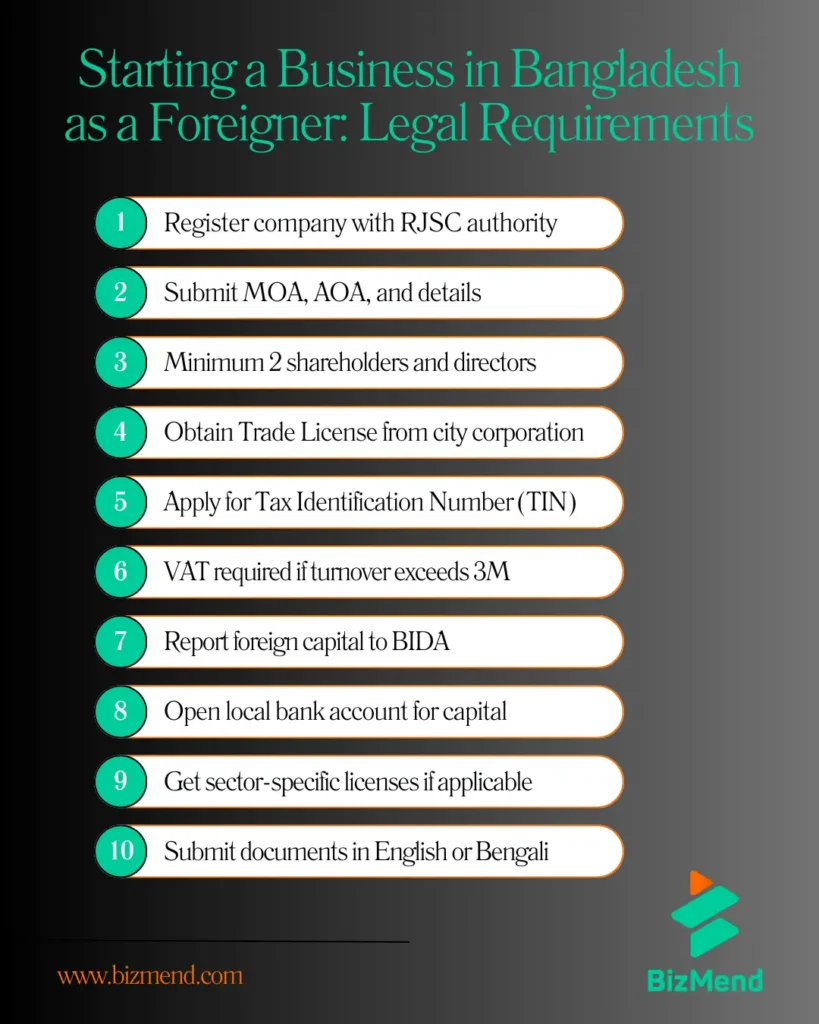
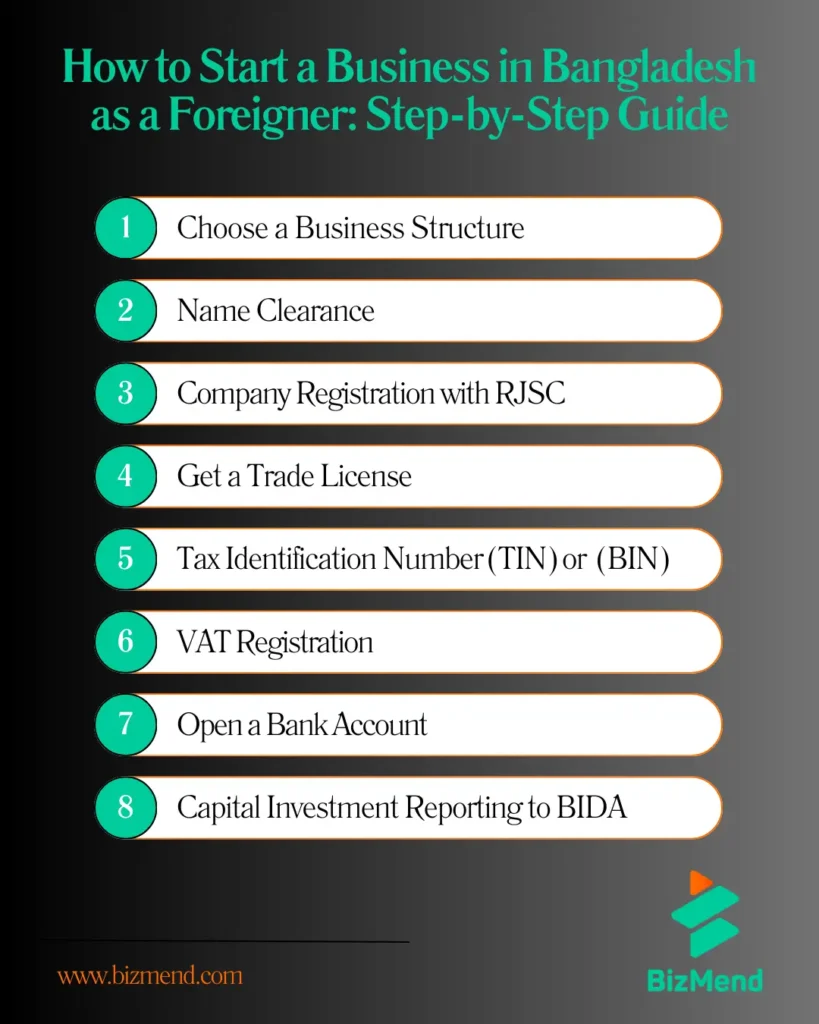
Here’s the real, actionable path:
You’ve got a few choices, depending on the size and scale of your ambition:
→ Requires 2 to 50 shareholders
→ Cannot offer shares to the public
→ Easier to manage, less regulatory burden
→ Requires at least 7 shareholders
→ Can issue shares to the public and get listed on the stock exchange
→ Requires prior clearance from the Bangladesh Securities and Exchange Commission (BSEC).
→ Heavier regulations, audit requirements, and capital standards
→ Suitable for large-scale enterprises, infrastructure, or industrial operations
Quick Note for Foreigners:
While foreigners can legally invest in a PLC, setting one up requires stricter scrutiny, pre-approval for capital markets, and coordination with both RJSC and BSEC. It’s not ideal for individual foreign entrepreneurs or small teams, especially without local legal assistance.
→ If you’re expanding an existing foreign company
→ Needs permission from Bangladesh Investment Development Authority (BIDA)
→ Cannot generate revenue without BIDA’s approval
→ A partnership between foreign and local stakeholders
→ Useful when local experience or distribution is critical
Quick Tip: If you’re testing waters in Bangladesh, a Private Limited Company is the most flexible and foreigner-friendly starting point.
Apply for the name clearance from the RJSC (Registrar of Joint Stock Companies and Firms).
Submit your:
It’s all online now, but yes, it still needs local follow-ups.
Issued by the local city corporation. For example, in Dhaka:
These are mandatory for business operations, employee hiring, and banking. Apply through the National Board of Revenue (NBR).
Especially if your annual turnover exceeds BDT 3 million. Apply through the VAT portal of the Government website.
You’ll need:
Recommended banks for foreigners:
HSBC Bangladesh, Standard Chartered, Brac Bank, Eastern Bank Ltd.
If you’re bringing in foreign capital, notify Bangladesh Investment Development Authority (BIDA).
They oversee:
Depending on your business type:
For regulated sectors like environment, telecom, healthcare, or energy, special ministry approvals may be needed.
Bangladesh’s business laws are strict if ignored. Some heads-up:
This isn’t a country where you want to ignore the paperwork. It bites back.
Bangladesh is friendly—until you skip paperwork. Don’t.
Quick tip: Hire a local CA (Chartered Accountant) or tax expert within 2 months of incorporation. You’ll thank yourself later.
Let’s talk where the gold is buried:
Yeah, about that, you need both—registration alone isn’t enough.
Types:
Apply through your nearest Bangladesh embassy, then report to BIDA locally.
Let’s switch gears and talk real life—not just paperwork. What if you actually moved to the country with your business and everything? Then this part’s for you.
Where to Stay
Food Culture
Shopping & Life Hacks
Internet & Connectivity
Bangladesh wants your business. Literally. You’ll find:
Still early-stage—but changing fast.
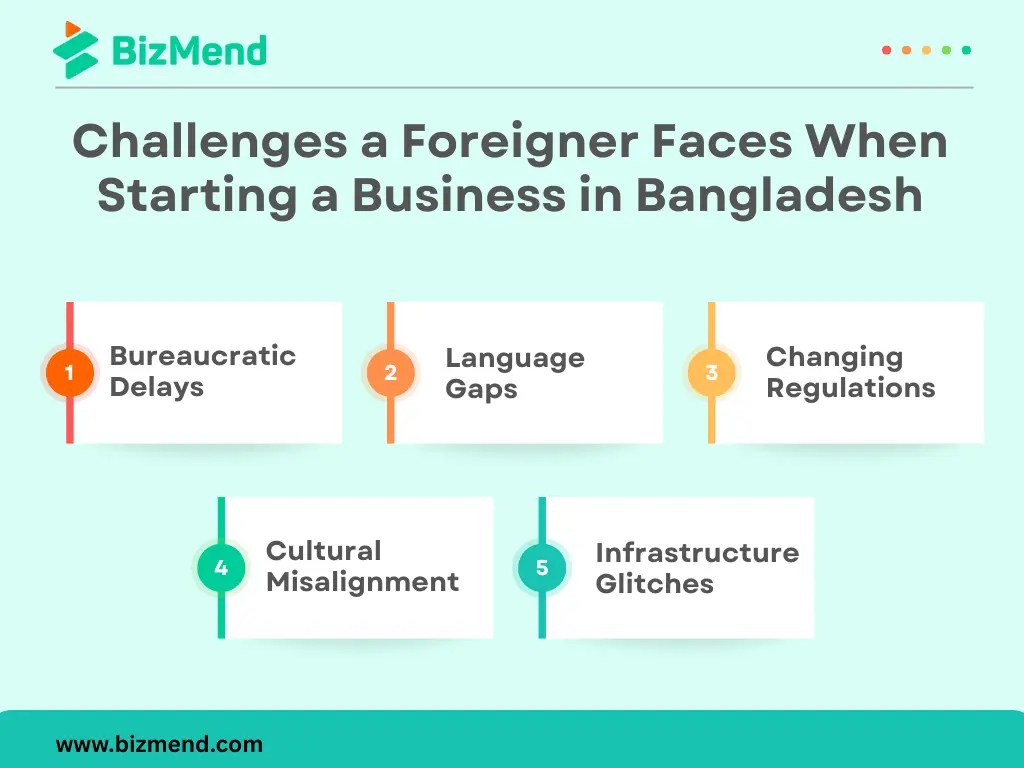
Let’s be honest—it’s not always smooth sailing. For all its promise, Bangladesh comes with its own learning curve. Here’s what most foreigners bump into:
Offices may say “next week,” but really mean “next month.”
Solution: Work with someone local who knows the system and can do the nudging.
While many officials speak English, street-level communication can be tricky.
Solution: Learn a few Bangla basics—or hire a fixer/translator for key steps.
Rules can shift overnight—especially tax or import rules.
Solution: Stay updated via NBR, BIDA, and legal advisors.
Directness may be seen as rude. Lack of small talk? Cold. Too fast? Distrustful.
Solution: Slow down. Show respect. Drink the tea.
Load-shedding, slow internet, or flooded roads in monsoon season can stall business.
Solution: Backup plans matter—from power banks to rainy season strategies.
Ready to put these steps into action and start a business in Bangladesh as a foreigner? Here’s how we can help.
To be honest, Bangladesh is not for the faint-hearted. It’s intense. It’s layered. It’s human.
But for those who take the time to learn—really learn—the reward is deeper than just business growth. It’s the connection, the loyalty, the tea stall that remembers your name.
Yes, it’s humid. Yes, there are traffic jams. And yes, sometimes the internet will vanish mid-Zoom calls. But this is also the land of resilient youth, roaring rickshaws, and entrepreneurship born from necessity. If you come here with respect, knowledge, and long-term intent—Bangladesh will open its doors.
Remember, you’re not just opening a company. You’re entering a rhythm.
It really depends on the kind of business you’re starting, but for most foreign-owned private limited companies, you’re looking at a minimum initial cost of around $1,500 to $3,000 USD. This includes government fees, legal help, trade license, TIN, VAT registration, and your local setup. If you’re renting a physical office or bringing in foreign capital, that adds to the total. Bangladesh doesn’t demand big capital—but it does demand clean documentation.
As a foreigner, you can invest directly through equity participation, joint ventures, or even set up a wholly foreign-owned company—all legal and supported. The Bangladesh Investment Development Authority (BIDA) is your main gateway. If you’re bringing in money from abroad, it must come through official banking channels, and you’ll need to report the investment to BIDA. A local bank account and proper documentation are non-negotiable—but once you’re in, you have full rights to repatriate profits.
Step one: choose your structure—most foreigners go for a Private Limited Company. Then, register your company with the RJSC, get your trade license from the local city corporation, and apply for TIN and VAT. If you’re investing capital from abroad, notify BIDA and open a local bank account. It may sound like a lot, but if you’ve got a good local partner or legal advisor, it’s entirely doable without setting foot in a government office.
If you’re looking for fast-growing markets, low operational costs, and raw potential, then yes—Bangladesh is more than good. It’s quietly powerful. The country has a rising middle class, a digitally connected youth population, and sectors like garments, tech, and agriculture that are ready for disruption. But it’s not plug-and-play — success here comes to those who respect the system, build local trust, and adapt to the pulse of the place.

Learn how to open a bank account in Australia: eligibility, documents, fees, and step-by-step process for residents, expats, and students.

Learn how to open a bank account in Pakistan: eligibility, documents, fees, and step-by-step process for residents, expats, and students.

Choose smarter with the Top 10 private banks in Singapore—ranked by AUM, digital maturity, awards, and local presence; compiled from…